Practical guides for getting recommended
Can a local business beat a national brand in AI answers?
Yes, a local business can hold its own in AI answers, and in our testing many already do. Across two rounds of testing through mid 2026, being local was not what decided who got named. The businesses AI tools mentioned had stronger public proof: a steady review base, pages that answer real customer questions, and a complete business profile. This post shows what the data says so far and where a local business should start.
Read more
Website reviews or Google reviews: which ones do AI shopping tools read?
Website reviews and Google reviews feed different AI tools, and neither replaces the other. Google reviews flow into Google's AI through your Business Profile, which online-only stores cannot have. Product reviews on your own site are the raw material ChatGPT uses, but only if they sit in the page itself. Most review apps display reviews with JavaScript, which most AI crawlers never run, and you can check yours in five minutes.
Can my clinic ask patients for Google reviews under AHPRA rules?
The short answer: yes, your clinic can ask patients for Google reviews. AHPRA has never banned patients reviewing you, and it does not ban a fair, open request. What section 133 of the National Law bans is you using testimonials about clinical care in your own advertising. Ask every patient, send them to a platform you do not control, never screen or edit, and never republish clinical praise on your own website or social pages. As of August 2026 that line still stands, with penalties up to $60,000 per offence.
Does ranking on Google mean AI will recommend your business?
Ranking on Google does not mean AI will recommend you. In our early scan data Google's own AI Overview is the strictest gate of the six engines we test, and the businesses that get named pull ahead on trust signals such as reviews and answer-style pages, not on fundamentals.
Do LinkedIn likes and followers help AI recommend your business?
AI engines do not recommend the LinkedIn posts that win the most likes and followers. They quote the ones that prove a point clearly, in a structured way, under a named expert. The pattern in the research is consistent. Cited posts earn only modest engagement, and most cited creators have small followings. Reach wins the human feed. Proof, depth, and a clear identity win the citation.
How should I ask customers for reviews in 2026?
The short answer: ask every customer the same way, not only the happy ones. Say one line in person as the job finishes, then send a direct review link by text and email 24 to 48 hours later, reply to every review, and turn the themes into website copy. Run it as a simple repeatable funnel, and a steady flow of fresh reviews also widens how many AI tools recommend you.
Why does ChatGPT show the wrong information for my business?
When a customer asks AI about a business like yours, the AI reads a quick, plain copy of your website, not the polished version people see. So a price hidden behind a button, or any fact that only loads after a click, can be missed or read wrong. Put the facts that win you the job, your price, your area, and what you do, into the page itself, and you stop losing customers you never knew you had.
My content is good. Why doesn't ChatGPT recommend me?
AI engines do not recommend the best writing. They recommend the content that most clearly matches the question a buyer typed. Many creative, voice-led service businesses win attention and lose citation, because their pages speak to people and give the machine nothing plain to lift. The fix is not a rewrite. It is changing the front door of a page so the engine can read it, while the voice and the story stay.
Why doesn't my business show up in Google AI Overviews?
The most likely reason: Google's AI has not found enough public proof of your business. In our early testing of 69 small business websites, the businesses left out of Google's AI answers usually had only a handful of Google reviews, and websites that did not answer customer questions directly. The websites themselves were healthy and well-built. The fix is simpler than most owners expect.
How do reviews affect AI recommendations for small businesses?
Reviews influence AI recommendations as one signal among several, not as a direct switch. AI engines weight reviews that are schema-marked, public, and attributable to a verifiable source, with recency and sentiment counting more than raw star count.
What belongs on an AI-friendly FAQ page now that Google's FAQ rich results are gone?
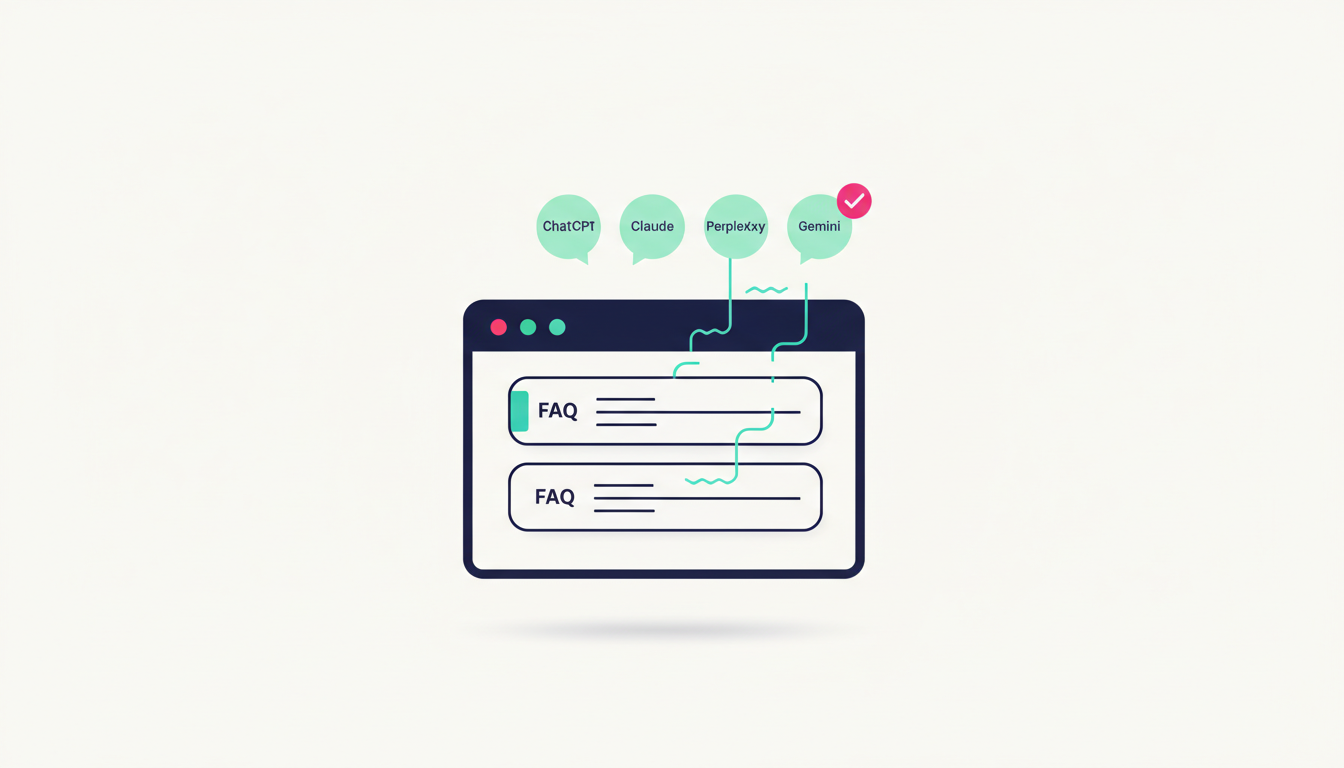
Google removed FAQ rich results from search in May 2026, but AI engines did not. ChatGPT, Claude, Perplexity, and Gemini still lift question-and-answer pairs from FAQ pages and quote them in their responses. An AI-friendly FAQ page needs customer-language questions, answer-first sentences, specific (not vague) answers, one claim per entry, concrete numbers and names, FAQPage schema in JSON-LD, and five to fifteen entries that each earn their place. Get the seven elements right and the page becomes the source AI engines quote when prospects ask in your category.
How do I know which prompts trigger AI recommendations in my category?
AI engines never search the prompt your customer typed. They rewrite it into several sub-queries first, so the prompts that actually trigger recommendations in your category are usually a layer underneath the question your customer asks.
How do I improve AI visibility for a local service business?
Local service businesses improve AI visibility by tightening five basics: a clear identity page, accurate LocalBusiness and Service schema with areaServed, fresh five-star-leaning reviews, steady name and address citations across the web, and content shaped around the questions customers actually ask.
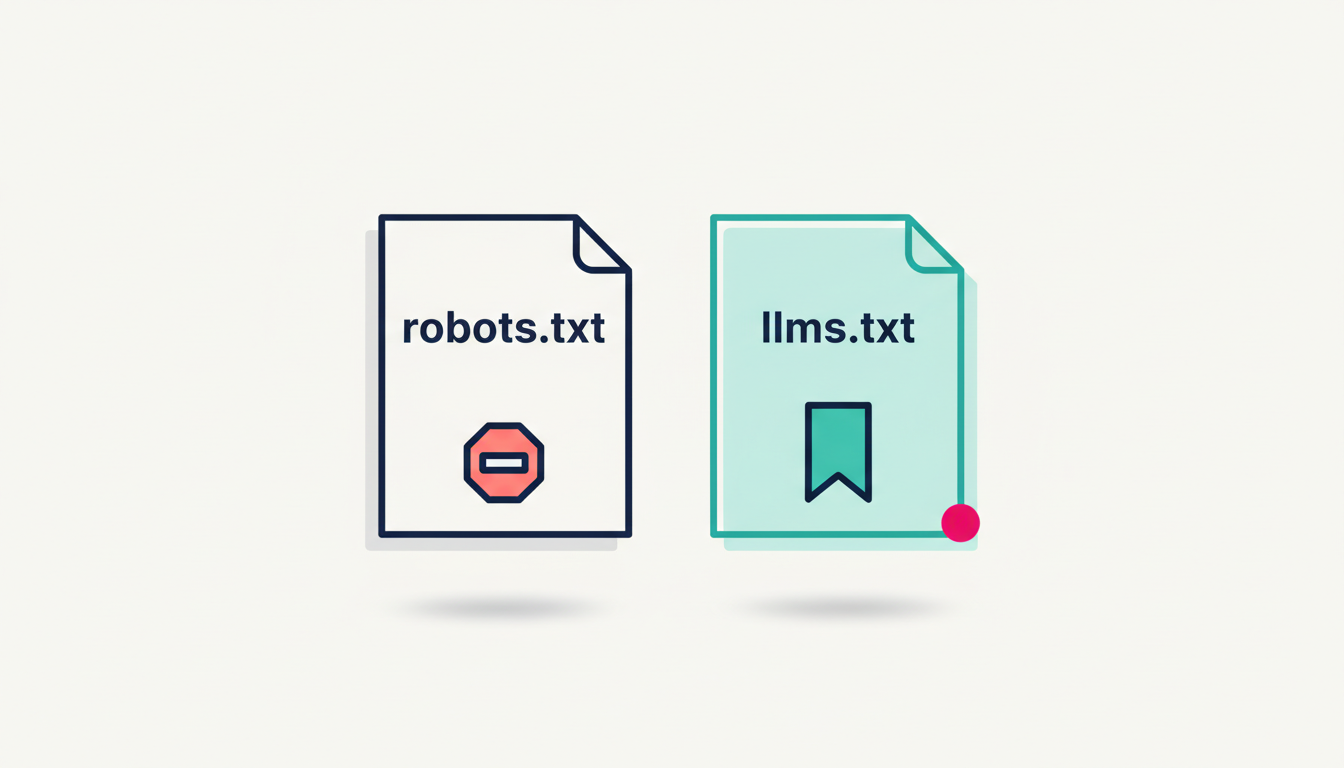
What is the difference between llms.txt and robots.txt?
robots.txt is a formal internet standard from 1994 that tells web crawlers which pages they should not fetch. llms.txt is a 2024 proposal from Answer.AI that tells AI tools which pages on your site matter most. One is exclusion. The other is curation. Small business sites need robots.txt working correctly. llms.txt is a low-cost addition for doc-heavy sites and low priority for most others.
How do I check AI visibility for a US small business website?
To check AI visibility for a US small business, run a working set of around 10 buyer-style prompts through the major AI chat engines (ChatGPT, Claude, Gemini, Perplexity, Grok) plus Google AI Overviews, then score each answer on whether your business is named, accurately described, and given a clear next step.
How much should an AI visibility audit cost in Australia?
An AI visibility audit for an Australian small business in 2026 falls into four price tiers: free DIY, free vendor scan, a paid one-off audit, and an ongoing retainer. The right choice depends on whether you need a snapshot, a research output, or a team augmentation, not the headline price.
How do I check AI visibility for an Australian small business?
To check AI visibility for an Australian small business, run a working set of around 10 buyer-style prompts through the major AI chat engines (ChatGPT, Claude, Gemini, Perplexity, Grok) plus Google AI Overviews, then score each answer on whether your business is named, accurately described, and given a clear next step.
What are the 5 best AI visibility tools for small businesses in 2026?
Five AI visibility tools for small businesses in 2026 are Profound, Otterly, Peec AI, Goodie, and GetRecommended.io. They differ on engine coverage, prompt control, rival benchmarking, pricing model, and team-size fit. Choose by which engines your buyers use, who writes the prompts, and whether you need rival share-of-voice or a one-off audit.
Why does my business rank on Google but not get recommended by AI?
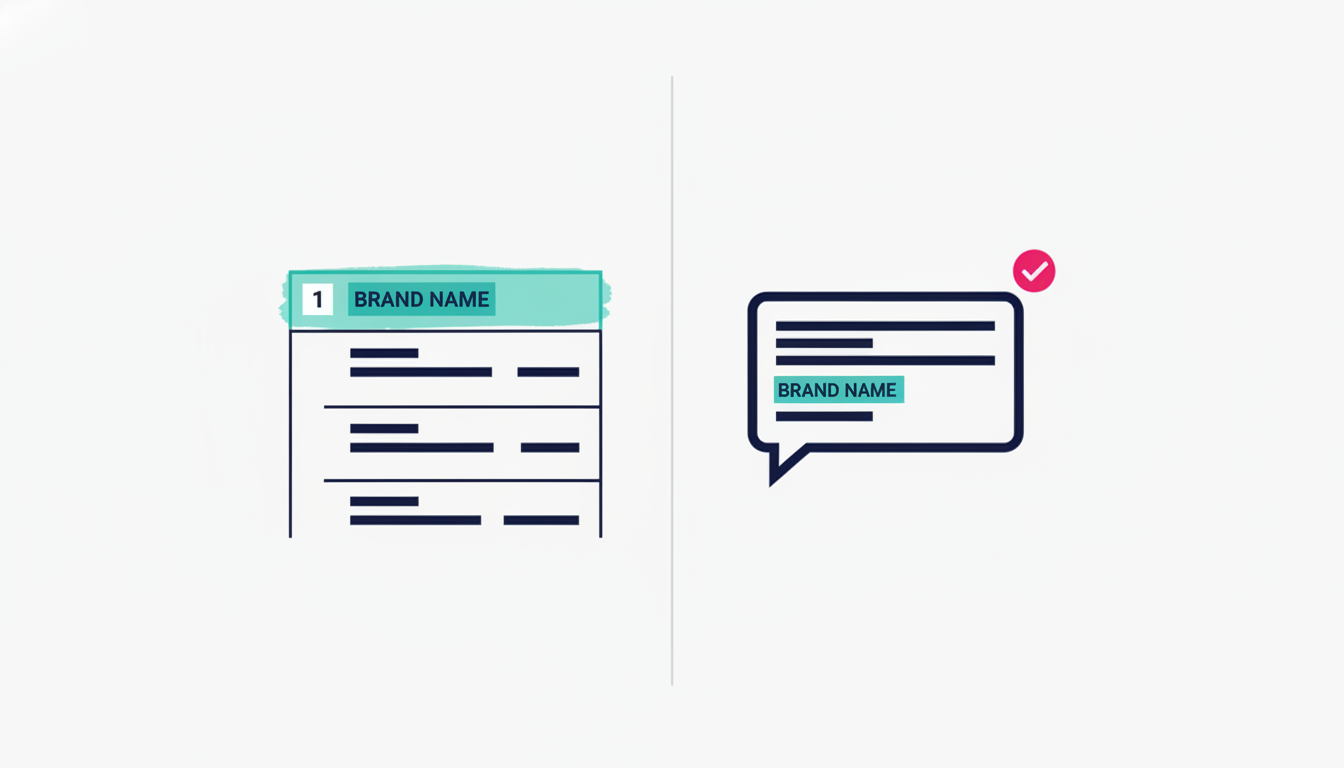
Google ranks pages on a query. AI engines select sources for an answer. The two systems use different signals, so a site can sit in the Google top ten and still be missed by ChatGPT, Perplexity, and Google AI Overviews. Ahrefs research found only 12% of URLs cited by AI tools also rank in the Google top ten for the same prompt. The gap usually sits in five places: weak structured data, no original statistics, thin knowledge graph presence, low brand co-occurrence on trusted sites, and a format that does not fit how an AI engine reads the question.
What should a small business do first after an AI visibility report?
You ran an AI visibility report and the list is long. The first moves are not new tools. Fix consistent name, address and phone across the web. Add or audit Organization or LocalBusiness schema in JSON-LD. Improve the pages already being cited rather than chasing every gap. Re-test in thirty days. Methods grounded in the Princeton GEO paper (Aggarwal et al., KDD 2024), Google Search Central, and Schema.org.
What is an AI visibility audit for a small business website?
An AI visibility audit measures whether AI engines name, recommend, or cite your business when someone asks a question in your category. The methods come from Princeton's 2024 GEO paper (peer-reviewed, KDD) and Google's official AI Overviews documentation. A useful report covers prompts, engine verdicts, competitor share, technical findings, trust profile, and a short prioritised action list.
How do I check whether ChatGPT recommends my business?
Checking AI visibility means measuring whether engines like ChatGPT, Perplexity, Gemini, and Google AI Overviews name, recommend, or cite your business when a buyer asks a category question. A useful check covers four data points (mentions, recommendations, citations, competitor share) and produces a six-section report ending in three or four prioritised moves.

What is the difference between an AI visibility checker and an SEO audit?
An SEO audit checks whether classic search engines like Google can crawl, index, and rank your site. An AI visibility checker tests whether AI assistants like ChatGPT, Perplexity, and Google AI Overviews really name your business when asked. Same goal, different surface, different signals.
Why optimising for ChatGPT won't help you appear on Perplexity
ChatGPT builds answers from cached training data and connectors. Perplexity runs a live web search for every query and leans on Bing's index, not Google's. The two engines reward different signals. Treating them as one tool leaves you visible on one and invisible on the other.

Why doesn't ChatGPT recommend my business when customers ask in my industry?
ChatGPT skips businesses it cannot identify, verify, or find outside confirmation of. Seven signals are usually responsible. Most owners are missing two or three, not all seven. The Seven-Reason Recommendation Block framework tells you which ones to fix first.
What does an AI visibility audit actually check on your business?
An AI visibility audit checks four pillars worth 25 points each: Technical Health, Content Quality, Authority and Trust, and AI Presence. Most businesses fail on the first two before the rest can compound.
Which schema and content patterns do AI engines actually reward?
AI engines reward four schema types (Organisation, LocalBusiness, Service, FAQPage) paired with three content patterns (question-led headings, answer-first paragraphs, customer-language FAQs). Most sites fix one half and wonder why citations do not move. Both halves have to be in place. The fastest combined fix is FAQPage schema on a properly written FAQ section.

How do you rank in ChatGPT answers when customers ask for a recommendation?
ChatGPT recommends businesses where three signals are clean: a clear identity on your own site, outside confirmation from reviews and directories, and extractable content the engine can lift. The Identity-Confirmation-Extraction Method gives you the order to build them in.
How to get recommended by AI search engines
Seven signals determine whether AI search engines recommend your business: positioning clarity, FAQ structure, schema markup, an AI guide file, review freshness, third-party authority, and entity consistency. Building these signals is different work from traditional SEO, and most businesses are missing two or three of them.
How do I check if my business shows up in ChatGPT and other AI search tools?
Around 37% of buyers now start with an AI tool, not Google. Testing your own brand name in ChatGPT is the wrong test. Use need-based queries across six engines, score each result as Recommended, Mentioned or Missing, and act on the pattern.
What is Answer Engine Optimisation and how do Australian small businesses get it right?
Answer Engine Optimisation is the work you do so AI tools confidently recommend your Australian small business when a customer asks in their own words. The Australian Small Business AEO Foundation organises that work into five signals you can act on this week.
Get new posts in your inbox
Practical AI search guides, sent when we publish.
Unsubscribe anytime. Privacy Policy.